- 70% of podcasters now use AI transcription, and among professional creators 67% use AI for editing, transcription, or post-production.
- The time savings are dramatic: editing has dropped from 4-6 hours to under 1 hour per episode, and post-production time falls 40-60%.
- The multiplier is repurposing: tools like Opus Clip auto-find 10-15 shareable clips from a one-hour episode, plus show notes and social posts.
- AI handles the production and distribution grind; the conversation, the guests, and the ideas - the actual show - stay yours.
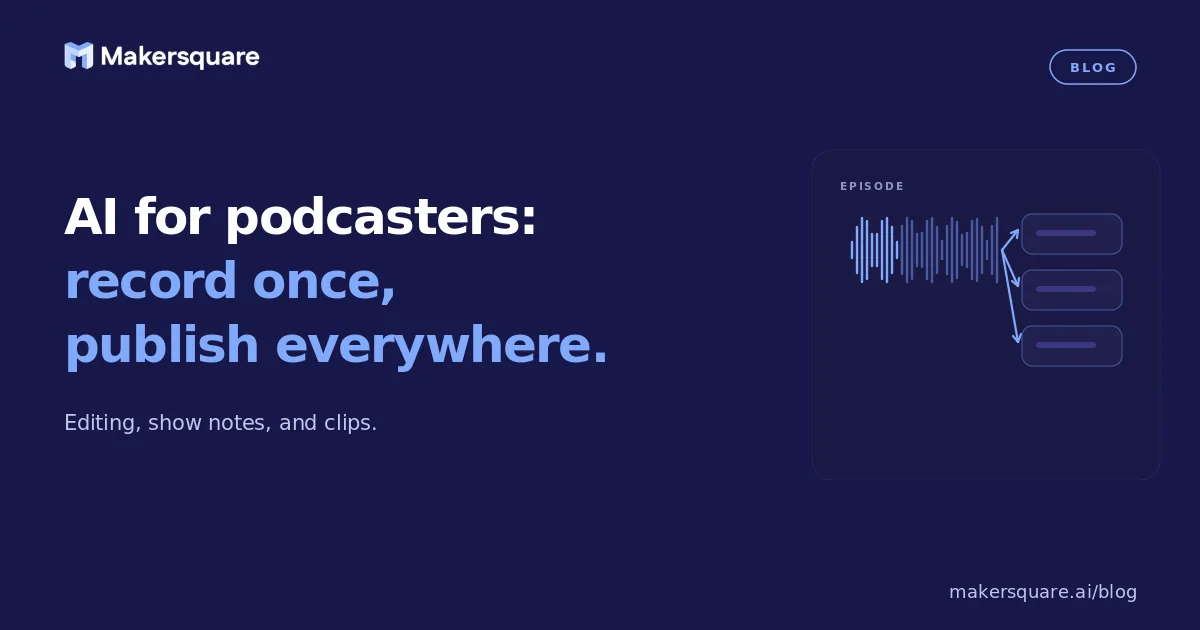
Podcasting has a brutal ratio: an hour of recording can mean a day of editing, show notes, clip-making, and distribution. That back-end is where podcasts die - not from bad content, but from creators burning out on post-production. The direct answer: AI collapses the entire back end of podcasting - editing, transcription, show notes, and clips - so 'record once, publish everywhere' finally becomes realistic, while the conversation and ideas that make the show worth hearing stay entirely human.
It's already how podcasts get made
Adoption is mainstream: 70% of podcasters now use AI transcription, and among professional creators, 67% use AI for editing, transcription, or post-production. 58% of podcast agencies now consider AI transcription a standard part of their offering. This isn't an edge tactic anymore - it's the default production workflow.
The back end, collapsed
Editing. The biggest win. AI editing tools (Descript, Riverside) have cut editing time from 4-6 hours to under 1 hour per episode - removing filler words, tightening pauses, and cleaning audio automatically. For a solo podcaster, that alone is the difference between sustainable and quitting.
Show notes and transcription. Generated automatically from the recording - the SEO-friendly, time-consuming write-up that most podcasters skip or rush, done in minutes.
Clips. The repurposing multiplier. Opus Clip automatically finds 10-15 shareable clips from a one-hour episode - the social content that grows a show, which almost no solo creator has time to cut by hand. Overall, podcasters report 40-60% time savings on post-production.
What AI can't do - which is the whole point
Here's the line. AI can edit the audio, cut the clips, and write the notes. It cannot have the conversation, book and connect with the guest, ask the follow-up question that makes an episode great, or bring the perspective people subscribe for. The show itself - the ideas, the chemistry, the voice - is exactly what AI doesn't touch and exactly what listeners come for. AI removing the post-production grind means more of a creator's energy goes into the part that actually matters: making a good episode. The tool handles everything around the conversation so you can focus on the conversation.
What this means for podcasters
If post-production is why your podcast is inconsistent (or stalled), AI is the clearest fix - and building it into your specific publishing workflow is a skill about your show, not code. That's the MakerSquare premise. Our use cases show what building tools around your real workflow looks like.
The podcast was never the editing. Hand that off and go make the episode.
MakerSquare is a 2-week in-person AI builder program in Austin, TX for creators and operators who want to automate the grind and keep the part that matters. See what two weeks of hands-on building looks like.